
2.8 The Body That Became an Asset
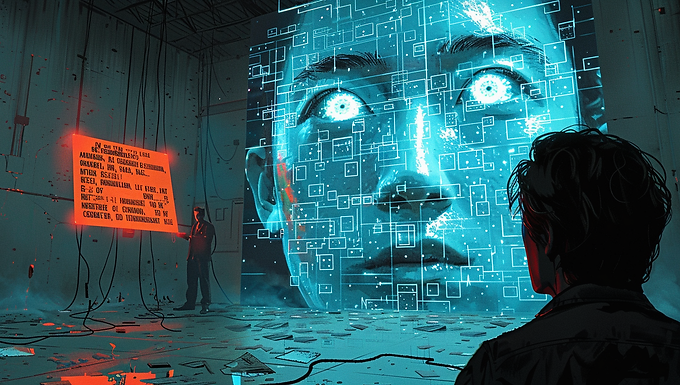
Hack: Summer 2023 – Autumn 2025, Hollywood and the Global Film Industry
On 13 July 2023, the Screen Actors Guild‐American Federation of Television and Radio Artists (SAG-AFTRA) declared a strike that would last a record 118 days. One hundred and sixty thousand actors took to the streets not only for higher wages. The principal demand formulated in the union's official statements was "protection from AI" (The Guardian, 2025).
By September 2025, with the strike in the past, the actors' fears had acquired tangible form. Tom Hanks was compelled to warn fans via social media: a video had appeared online featuring his digital double advertising a dental clinic. The actor had no connection to this clip (REN TV, 2025). Scarlett Johansson refused to cooperate with the developers of a leading neural network platform — it emerged that the company had already used a synthesised voice indistinguishable from the actress's voice without her knowledge or consent (REN TV, 2025). Bryan Cranston publicly thanked OpenAI for strengthening protection against deepfakes — after users of the Sora 2 platform created a series of videos with his face and voice, simulating his participation in projects to which he had no connection (The Guardian, 2025).
But the true symbol of the new order became an event that took place in September 2025 at the Zurich Film Festival. Particle6, a company specialising in artificial intelligence technologies, presented Tilly Norwood — the first fully artificial "actress," positioned as an "original AI performer." Tilly does not copy a specific person; she was created on the basis of thousands of hours of recordings of performances by real actors, whose faces, gestures, expressions, and intonations served as training material. Her parameters, according to the company's press release, can be adjusted "down to the micro-expression." The actors whose faces and movements were used to train the neural network were not paid a single cent.
The figures accompanying the presentation speak for themselves: an AI actor requires no salary, no union dues, no overtime pay, no makeup, no stunt doubles, no residuals. The return on investment for projects involving AI actors, according to industry analytical reports, is 41% higher than for traditional ones. Job losses for extras and supporting actors are estimated by experts at 42% (The Guardian, 2025).
A scene worthy of dystopia: crowds of living actors, just returned from the strike, watch on screens a being that never lived but will work forever.
The Fourth Level of Alienation
To adequately grasp the philosophical significance of what is happening, it is necessary to turn to a category that underwent a complex evolution in the history of thought before acquiring its contemporary configuration — the category of alienation.
Karl Marx described three forms of the alienation of labour: alienation from the product of labour, alienation from the labour process, and alienation from species-being (Marx, 1976: 90–94). The worker for Marx sells his labour power, but not himself. In the morning he comes to the factory, in the evening he leaves. His body belongs to him, even if his labour belongs to the capitalist. Capital may buy the worker's time, but not his biological identity, not his face, not his voice.
Deepfakes and synthetic actors hack this limit. The actor no longer sells his time and skills — he sells (or has alienated from him) a digital copy that can be used infinitely, without his participation, without fatigue, without ageing, even after his death. Marx could not imagine capital that reaches the point of alienating not only labour but also the very mode of the body's existence in digital space.
The actor whose face is used without consent ceases to be the author of his own image. His identity is produced somewhere else, by someone else, for purposes alien to him.
What emerges is what can be called the fourth level of alienation, not anticipated by Marx's schema. The alienation of labour is replaced by the alienation of being. You not only do not own the product of your labour — you do not own your face, your voice, your gait. You become raw material for the production of your own copies.
Foucault and the Birth of Digital Biopower
Michel Foucault, in Discipline and Punish and his lectures on biopolitics, showed how power penetrates the body, disciplines it, optimises it, governs it. Biopower makes life an object of governance: birth rates, mortality, health, hygiene, sexuality — all become objects of rational control (Foucault, 1995: 201–204; 2008: 285–287). Power acts upon living bodies through prisons, hospitals, barracks, schools. Even when Foucault speaks of "technologies of the self," he is concerned with how man works upon his own body.
Deepfakes and synthetic actors create a fundamentally new dimension — the digital body. It does not feel pain, does not tire, does not die. It requires neither food nor sleep nor salary. It is the ideal object of governance: completely transparent, infinitely editable, never resistant. Biopower becomes digital.
Pavel Tishchenko (2022: 272), analysing this new reality, introduces the concept of "biotechnological socially distributed production." Power no longer merely disciplines the body — it produces its digital copies, which can exist independently of the original. The copy does not age, does not tire, does not go on strike. It is pure resource, pure function, pure signifier without signified.
Konstantin Ocheretyany develops this intuition through the concept of "being in digitality." He shows how information abundance turns into information alienation: from an equal participant in communicative processes, man is transformed into a "parasite," from a subject of meaning-production into a "carrier of information" (Ocheretyany, 2019: 64). The actor whose face becomes raw material for a neural network ceases to be an author and becomes a resource. His existence in digital space turns out to be more significant for the system than his physical presence.
The shift that this case exposes: the body has ceased to resist power through fatigue, illness, death. It has become pure resource in an infinite cycle of copy production. Biopower has reached its ultimate form — power over the digital double that will never die.
Kant and Autonomy in the Age of Digital Copies
Immanuel Kant, in the Groundwork of the Metaphysics of Morals, formulated the principle that became the cornerstone of European ethics: man must never be used only as a means, but always also as an end. Every human being is an end in himself, possessing dignity, not a price (Kant, 1998: 269–270). The Kantian imperative prohibits the instrumentalisation of the human being. One cannot treat another as a thing, as a resource, as a means to achieve the ends of others, even if those ends are good.
The actor whose digital double is created without consent becomes a pure means. His body is used for ends he did not choose, in contexts he does not approve. Nikita Mikhalkov, commenting on the possibility of creating deepfakes of prominent cultural figures, formulates this with extreme harshness: a talentless person can create images of Sergei Bondarchuk or Nonna Mordyukova and use them for his own purposes, being "in absolute safety from the possibility of getting a punch in the eye from them" (Rambler, 2024). A remark that sounds like an anecdote exposes a most serious problem: the dead cannot protect their faces, the living cannot track all the copies.
Kant lived in a world where a person's corporeality was obviously tied to his presence. Today, this bond is broken. Your face can work while you sleep. Your voice can voice advertising you hate. Your body can appear in films you never approved. The autonomy of the subject, which Kant considered inalienable, turns out to be technically surmountable.
Kantian autonomy requires a digital dimension. The right to self-determination must today include the right to control over one's digital copy — during life and after death. But does a mechanism exist for the realisation of this right in a world where copies are indistinguishable from originals, and training sets are composed of millions of faces, unaccounted for and unauthorised by anyone?
Deepfakes as Epistemic Threat
The British philosopher Taylor Matthews offers a completely new perspective on the problem of deepfakes. In a series of works from 2022–2024, he develops the concept of "epistemic vices" and shows that deepfakes are dangerous not only because they deceive.
Matthews argues: deepfakes cultivate in the viewer "intellectual cynicism" — an attitude in which man ceases to trust any testimony at all. When any video may turn out to be a forgery, the viewer develops a pathological distrust of all visual content (Matthews, 2022: 68). This distrust is not selective; it is total. It undermines the very possibility of testimony, the very possibility of trusting the image as a bearer of truth.
In "Deepfakes, Fake Barns, and Knowledge from Videos" (2023), Matthews draws a parallel between deepfakes and the classic "fake barn cases" in epistemology. In these thought experiments, a traveller passes through an area where there are fake barn façades, and only one barn is real. Even if he happens to see the real barn, can it be said that he knows it is a barn and not a fake? The danger, for Matthews, is not that a particular video recording may be false, but that an entire domain of testimony becomes epistemically risky (Matthews, 2023: 2).
For the case of actors, this means: when the viewer can no longer distinguish an actor's real performance from a synthesised one, not only the actors' labour is threatened, but also the very structure of trust in the visual. Tilly Norwood, the synthetic actress, undermines not only the labour market but also the epistemology of cinema. We no longer know who is before us — a human or a simulacrum. We no longer know what to believe.
The shift that Matthews exposes: deepfakes change not only production but also perception. We lose not only work but also the ability to trust our own eyes. Epistemic cynicism becomes the new normalcy.
Synthetic Media as New Ontology
The Lithuanian philosopher Ignas Kalpokas insists on terminological precision: the term "deepfake" is obsolete. It is more correct to speak of "synthetic media," which do not falsify reality but create a parallel one.
Kalpokas shows that deepfakes are not merely a technology of deception but a new ontology of the image. Traditional photography and cinema assumed that the image had a relation to a real event that occurred before the camera. Even in the most sophisticated special effects, a connection to the referent was preserved: something was filmed, something existed. Synthetic media require no referent. Tilly Norwood does not copy a specific actress — she was created on the basis of thousands of faces but is none of them (Kalpokas & Kalpokiene, 2022: 45–47). She is a pure image, having no original.
The shift that Kalpokas exposes: synthetic media create a new type of entity — a non-human actor. Actors protest against the use of their faces, but their faces have already been used — to train the neural network that creates Tilly. They cannot prohibit this, because their faces have become part of the "training set." They have dissolved into the statistical distribution from which new faces are born, belonging to no one and everyone simultaneously.
Pavel Tishchenko, in his work "The Case of He Jiankui and Chinese Eugenics" (2024), analyses how biotechnologies are changing the understanding of human identity. Although he writes about genetic editing, his conclusions apply to deepfakes as well: when the human body becomes an object of technological manipulation, we cease to be "born" and become "produced" (Tishchenko, 2024: 110). Birth presupposes givenness, unpredictability, uniqueness. Production presupposes a project, specification, replication.
The Hong Kong philosopher Yuk Hui offers perhaps the most radical conceptual apparatus for understanding what is happening. Hui develops the concept of "digital objects." The digital object, unlike the physical one, exists in a mode of constant recursivity — it is continuously updated, reassembled, reconfigured (Hui, 2016: 45–48). It has no fixed form, is not tied to a specific place and time, does not obey the laws of physical decay.
Hui's key concept is "cosmotechnics." He shows that different civilisations may have different relations with technics, not a single Western path of technological development. Technics is always inscribed in a specific cosmos, a specific way of understanding the world and the place of the human being within it (Hui, 2019: 112–115). For the case of deepfakes, this means: what is happening in Hollywood is not universal. In other cultures, the relation to digital doubles, to the posthumous use of faces, to authorship and identity may be different. The Western model, where the actor's face becomes a commodity and his digital copy becomes a corporate asset, is not the only possible one.
The shift that Hui exposes: the digital object (the deepfake) exists in a different ontological regime than the physical body. It does not require validation by reality. It is its own reality.
From Ontology to Anthropology
Let us draw a preliminary conclusion. What is happening in Hollywood and the global film industry in 2023–2025 is not merely a technological shift or another turn in the struggle between labour and capital. It is an ontological transformation.
Marx showed the alienation of labour, Foucault the production of the body by biopower, Kant the foundations of the autonomy of the person. Matthews adds the epistemological dimension: the destruction of trust. Kalpokas — the ontology of the image without referent. Tishchenko and Popova — the biotechnological construction of identity. Hui — the specificity of digital objects and the multiplicity of cosmotechnics. Ocheretyany — the transformation of the subject into a carrier of information, into a source of interference.
Together, they provide a multidimensional picture: the body has ceased to be a given. It has become an asset that can be used independently of the "owner's" will. In each case, what seemed inalienable (desire, matter, decision, subjectivity, nature, body) becomes an object of production, exchange, holding.
The question that arises after all these cases is not legal nor political, although it has legal and political dimensions. It is ontological.
What remains of the human being when his body can be separated from him, used independently, replicated infinitely, sold without consent? Does the "I" remain somewhere in this stream of digital copies? Or does the "I" become merely another function — a function of holding identity in a space where everything can be copied except uniqueness?
Konstantin Ocheretyany offers an unexpected answer: "man affirms his existence as a source of interference. Noise, glitch, fake become for new forms of digital existence what autorhythmia was for analog existence" (Ocheretyany, 2019: 64). Perhaps the only way to remain oneself in a world of total copyability is to learn to produce noise that cannot be copied? Perhaps authenticity today is not smoothness but glitch? Not the perfect copy but the unique error?
There is no answer. But the question itself already changes everything.
The question that remains after Tilly Norwood and the thousands of actors whose faces became a training set is this: will we learn to produce such noise? Or will we resign ourselves to the fact that our face can work forever, while we — only as long as we are paid?